Forced Reset Trigger Explained: How It Works, Legality, and What It Means for Your AR-15
Shooters often struggle with fast, controlled follow-up shots because a traditional trigger requires a full reset before the next round can fire. A forced reset trigger eliminates this lag by mechanically pushing the trigger forward immediately after each shot, allowing the sear to re-engage without the shooter’s finger needing to move on its own. This semi-automatic system cycles as fast as the user can pull the trigger, with the forward motion being driven by the firearm’s bolt carrier group rather than by muscle memory. The result is a shorter, more consistent pull that minimizes shooter-induced timing errors and maximizes split times without converting the rifle to fully automatic fire.
What Exactly Is a Forced Reset Trigger and How Does It Work?

A forced reset trigger is a mechanical replacement for a rifle’s standard trigger group that uses the weapon’s bolt-carrier energy to physically push the trigger forward again after each shot. When you fire, the carrier recoils rearward and then slams forward into battery. That forward movement strikes a small ramped surface on the trigger shoe, literally shoving it out from under your finger. This resets the sear without you ever releasing pressure. You keep your trigger finger held fully rearward; the system does the release for you. The hammer drops again the instant the bolt closes, creating a rapid, consistent cycle of fire until you ease off the trigger. In practice, it feels like a two-stage bump—but it’s pure mechanical forced reset trigger super safety linkage, not spring-assisted recoil. Your finger stays stationary, and the rifle fires as fast as its carrier can travel.
The Internal Mechanics: How the Reset Cycle Is Manipulated
The forced reset trigger exploits the carrier’s rearward travel to trip a sear that releases the hammer before the bolt fully returns to battery. A precisely angled cam on the trigger bow engages a ramp on the lower receiver, converting bolt momentum into trigger reset without shooter input. This mechanical reset intervention shortens the lock time by shaving the natural pause where a shooter would normally release the trigger. The key is timing: the sear must catch the hammer at the exact millisecond of bolt bounce, then drop it as soon as the carrier moves forward again. Any drag or friction in the cam path causes misfeeds, so the contact surfaces are polished and hardened.
- A cam-and-ramp pair transfers bolt energy directly to the trigger, skipping manual release.
- Sear engagement depth is tuned to catch the hammer during bolt carrier bounce—not before or after.
- Reset travel is minimized to less than 0.1 inches, forcing immediate follow-up shots as the bolt cycles.
- Lubrication viscosity alters reset speed; heavier oils slow the cam action and can cause double-fire or hang-ups.
Difference Between a Binary Trigger, a Bump Stock, and This Device
A binary trigger fires once on the pull and once on the release, giving two shots per trigger cycle but requiring a deliberate finger rock. A bump stock uses recoil energy to bounce the firearm against your trigger finger, achieving rapid fire without altering the trigger mechanism itself—accuracy suffers significantly. A forced reset trigger, however, mechanically pushes the trigger forward after each shot, so your finger must follow it back into place, enabling fast, controlled fire while retaining a standard semi-automatic action. *Unlike a bump stock’s passive momentum, the forced reset actively returns the trigger, giving you more predictability and shot-to-shot control.* The key difference between a binary trigger, a bump stock, and a forced reset trigger is how the trigger’s return is managed—binary counts your release, bump stock relies on motion, and forced reset dictates your follow-through.
Q: For a new shooter, which is easiest to shoot accurately—binary, bump stock, or forced reset?
A: The forced reset trigger is easiest for accuracy because it maintains a consistent trigger-reset point, letting you keep your grip and sight alignment, whereas binary forces you to manage two distinct break points and bump stock disrupts your shoulder weld entirely.
What Shooting Performance Gains Do You Get From Installing One?
A forced reset trigger delivers its primary performance gain by drastically shrinking the time between your trigger pulls, converting a standard semi-auto into a platform that fires as fast as you can maintain a stable hold. The reset is so short and aggressive that your finger barely lifts before the sear re-engages, letting you hammer follow-up shots with minimal input. This translates to tighter, faster double-taps on target, because the rifle stays on aim without your trigger finger absorbing the recoil cycle’s slack. You’ll see a measurable jump in rounds-on-target per second during controlled pairs, and a noticeable reduction in shot-to-shot dispersion under rapid fire, since you’re not fighting a long, mushy reset. The shooting gain is real: your cadence becomes limited by your physical recovery, not the trigger mechanism.
The key insight is that you gain the ability to fire at near-bump-fire speeds while maintaining a full, deliberate pull on every shot, so your accuracy holds up far better than with any gimmick.
Measurable Increase in Rapid-Fire Speed and Follow-Up Shot Accuracy
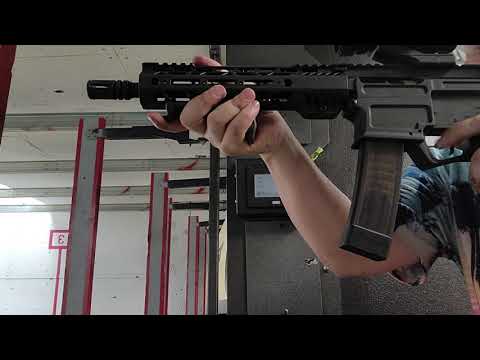
A forced reset trigger delivers a measurable increase in rapid-fire speed by mechanically returning the trigger forward before your finger completes its release, allowing shot intervals to drop into the 0.05–0.10 second range without altering your grip. This translates to follow-up shot accuracy gains because the reset is consistent—your trigger finger travels the same short distance every time, eliminating the variable over-travel that causes flinching or muzzle shift. You will see tighter groups on double-taps and controlled bursts because the rifle’s recoil impulse remains predictable while your support hand stays locked. Even at doubled cyclic rates, the shooter’s sight picture returns to the same aiming point almost immediately, since the reset does not disturb the shoulder weld. That consistency is what turns raw speed into repeatable hits, not just noise.

Measurable increase in rapid-fire speed and follow-up shot accuracy comes from a forced reset trigger’s fixed, short travel and predictable return, enabling faster splits with no loss of point-of-aim discipline.
Recoil Management and Muzzle Control During Sustained Fire
During sustained fire with a forced reset trigger, recoil management becomes inherently rhythmic because the reset cycle forces the shooter to maintain a consistent grip and scar frt trigger shoulder weld. The trigger’s abrupt return to the forward position shortens the time between shots, meaning muzzle rise accumulates faster if the shooter fails to counter it. Effective muzzle control during sustained fire relies on leaning into the rifle and using a firm support-hand pull to keep the front sight tracking on target, as the reset-driven cadence leaves less time for corrective re-aiming. The shooter must also modulate trigger finger pressure to avoid disturbing the sight picture mid-cycle, since the forced reset does not delay for recoil recovery. This demands a stable stance and active tension through the firing shoulder to absorb the repetitive impulse.
Recoil management and muzzle control under a forced reset trigger hinge on maintaining a rigid platform and exploiting the reset rhythm to keep the muzzle flat across multiple shots.
Is a Forced Reset Trigger Legal for Your Firearm Setup?
The legality of a forced reset trigger in your firearm setup hinges on whether the component’s mechanical action—where the trigger physically pushes your finger forward after each shot—is judged by your local authorities as a mere trigger modification or as a device that mimics full-automatic fire. For most AR-15 builds, a forced reset trigger is treated as a semi-auto part because it requires one trigger pull per round, but the ATF’s opinion can shift based on how your specific setup pairs the trigger with a lightweight bolt or an adjustable gas block. If your rifle’s cyclic rate becomes excessively fast or the trigger’s reset spring fails to fully return, a m249s binary trigger prosecutor could argue your setup crossed into machine-gun territory. Always test your forced reset trigger with the exact upper and lower receiver you plan to keep, and verify that the trigger’s hammer follows the bolt correctly—because a malfunctioning reset is what turns a legal part into a legal liability.
Key Legal Distinctions: Forced Reset vs. Full-Auto vs. Semi-Auto
The core of forced reset trigger legality hinges on mechanical function, not perceived rate of fire. A semi-auto fires once per trigger pull, with the trigger resetting via spring tension; a forced reset trigger uses recoil or bolt energy to actively push the trigger forward, but the sear still catches and requires a distinct pull for each shot. In contrast, a full-auto uses a sear that releases continuously while the trigger is held, firing multiple rounds from a single pull. Since a forced reset trigger never allows more than one frt-15l3 round per pull and does not utilize an automatic sear, it is not legally classified as a machinegun under federal law. However, if the reset energy causes the trigger to break before the shooter fully releases it, the weapon may function like an illegal full-auto. The legal distinction is thus function-based, not design-based, meaning any modification mimicking continuous fire can trigger reclassification.
State and Local Restrictions to Check Before You Buy
Before you grab a forced reset trigger, check your **state and local restrictions** first, since laws vary wildly even between neighboring counties. Your city or township might ban certain trigger classifications outright, even if your state allows them, so look up municipal codes alongside state statutes. Also, verify if your state uses its own definition of “machine gun” that could catch forced reset triggers, and confirm whether local range rules prohibit them. A quick call to a local gun shop or sheriff’s office can clear up confusion, but don’t rely on word-of-mouth—read the actual ordinances. Ignoring these local rules could turn a fun upgrade into a legal headache, so spend ten minutes researching before you order.

- Check your city and county codes for trigger-specific bans.
- Confirm whether state law classifies forced reset triggers differently than federal rules.
- Ask your local range if they allow forced reset triggers on their property.
How to Install and Tune the Unit for Your Specific Gun Model
Begin by confirming your firearm’s lower receiver is fully compatible with the forced reset trigger’s housing geometry, as drop-in units vary by platform (AR-15, SCAR, or MPX). Field-strip the gun, then insert the trigger cassette or install the hammer and disconnecter per the manufacturer’s diagram, ensuring the trigger pin holes align without forcing. After reassembly, tune the trigger for your specific gun model by adjusting the reset spring tension and the sear engagement screw, typically accessible from the bottom of the cassette. Cycle the action manually with the upper installed, listening for a distinct “click” that signals the hammer is following the bolt. Fire one round at a range, then fine-tune the over-travel set screw to prevent the trigger from sticking forward. For blowback or piston models, reduce spring preload if the bolt fails to fully reset the trigger.
Tools Needed and Step-by-Step Installation Overview
Installing a forced reset trigger requires specific tools: a bench block, roll pin punches (1/16″, 3/32″, 1/8″), a non-marring hammer, needle-nose pliers, and a gunsmith’s vise. Begin by field-stripping the lower receiver, removing the grip and fire control group. Position the new trigger assembly onto the receiver’s pivot points, ensuring the hammer spring legs align correctly with the trigger’s sear surfaces. Drive out the factory hammer and trigger pins using the bench block, then insert the FRT’s proprietary pins, tapping them flush. Reinstall the grip, test the reset function with a snap cap—checking for a tactile, audible click—and verify the hammer does not ride the bolt carrier. Tune the adjustment screw (if present) in quarter-turn increments until the reset is crisp without doubling.
Step-by-step installation for forced reset triggers demands patience; misaligned springs cause malfunctions. Use a slave pin to hold the trigger and hammer together during insertion—this prevents the sear from slipping. After assembly, cycle the action manually 20 times to ensure the reset linkage moves freely. If the trigger fails to reset, disassemble and check for burrs on the hammer’s engagement face.
Q: What is the most critical tool for installing a forced reset trigger? A: A roll pin punch set with a bench block—without these, you risk bending the receiver’s pin holes, which ruins the trigger’s timing.
Adjusting Spring Tension for Reliable Reset Across Ammunition Types
When tuning a forced reset trigger, adjusting spring tension for reliable reset across ammunition types is the difference between a gun that runs and one that jams. Hotter loads produce more bolt carrier velocity, so the reset spring needs enough force to catch that faster forward travel—otherwise the trigger stays stuck to the rear. Lighter target loads, though, can fail to overcome a stiff spring, leaving the hammer short of its sear trip. Start with the rare breed trigger factory spring setting, then shoot a few rounds of your weakest ammo; if the trigger doesn’t click back audibly, reduce tension by a quarter turn. Then load your hottest rounds—if you feel a sluggish or delayed reset, tighten it back up slightly. You’re chasing the sweet spot where the spring just barely beats the bolt’s return speed at every power level.
Q: Why does my reset work with one brand but not another?
A: Because spring tension interacts with bolt velocity—different powder charges and bullet weights change how hard the carrier slams back into battery. The fix is a compromise setting that clears your weakest round while still catching your strongest.
Compatibility: Which Rifle Platforms and Aftermarket Parts Work Best?
Forced reset triggers achieve optimal compatibility with AR-15 platforms using standard mil-spec lower receivers and semi-auto bolt carrier groups. Heavy-profile barrels and carbine-length gas systems reduce bolt velocity variance, improving reset consistency. Aftermarket parts like adjustable gas blocks are critical—they let you tune dwell time so the bolt cycles fast enough to re-engage the trigger shoe without short-stroking. High-mass buffer systems (H2 or H3) often stabilize timing on shorter 10.5–14.5 inch barrels. For AR-10/LR-308 platforms, only reinforced trigger hammers and extra-power hammer springs (e.g., 15% heavier) prevent misfires. PDW stocks with proprietary buffer tubes may alter carrier travel and should be tested for clearance. Direct-impingement rifles generally outperform piston-driven uppers because piston carriers’ varying velocity disrupts the reset mechanism’s fine-tuned engagement window.
Optimal Upper Receiver, BCG, and Buffer Weight Pairings

For forced reset triggers, the optimal receiver and carrier group pairing hinges on mass and gas dynamics. A standard-weight BCG (approx. 11.5 oz) with a carbine or H1 buffer (3.0–3.8 oz) provides the most predictable bolt velocity, preventing the trigger’s reset cam from being outrun during rapid fire. Lighter BCGs or H2/H3 buffers can cause short-stroking or delayed reset, respectively, while an adjustable gas block tuned to barely cycle the carrier reduces bolt bounce and ensures consistent sear re-engagement. In AR-10/LR-308 platforms, use the heavy carrier (13.5+ oz) with an H2 buffer and rifle-length gas system; oversized frames require that pairing to mitigate the FRT’s higher bolt thrust. Avoid low-mass or titanium carriers entirely, as they reduce inertia needed to reset the trigger’s linkages reliably.
Standard-weight BCG with carbine/H1 buffer in AR-15, and heavy carrier with H2 in AR-10, produce the most reliable forced reset trigger function.
Common Malfunctions With Underpowered or Lightweight Builds
Underpowered or lightweight builds frequently induce forced reset trigger malfunctions because the carrier lacks sufficient momentum to complete the reset cycle against recoil spring tension. A carbine-length gas system with a low-mass bolt carrier often short-strokes, leaving the trigger shoe forward and producing a dead trigger on the next pull. Similarly, a pencil-profile barrel with an excessively light buffer can cause bolt bounce, which lets the hammer follow the carrier and slam into the sear prematurely, yielding unintentional double fires. Buffer weights below H2 in a pistol-length system exacerbate sluggish return, while weak aftermarket hammer springs reduce positive sear engagement, causing intermittent hammer-follower during rapid cycling. These failures surface as erratic shot-to-shot timing, failure to reset audibly, and occasional burst fire—all correctable only by adding reciprocating mass or increasing gas dwell.
- Short-stroking from insufficient carrier velocity prevents trigger reset.
- Bolt bounce with ultra-light buffers causes hammer-follow and double fires.
- Weak hammer springs in lightweight triggers allow sear slip under recoil.
- Oversized gas ports in lightweight barrels overspeed rare breed mp5 frt the carrier, causing hammer override.
How to Choose the Right Manufacturer and Kit for Your Needs
Start by matching the kit to your platform’s exact bolt carrier group and lower receiver geometry, as forced reset trigger kits demand tight tolerances that vary between AR-15 generations and even between billet and forged receivers. Choose a manufacturer that publishes detailed installation videos and torque specs, because a poorly fitted cam track or spring will cause hammer follow or short strokes. Look for kits that include a reinforced trigger pin set and a dedicated anti-walk retention system, since the violent reset action can walk standard pins. Prioritize makers who offer a tuning spring pack for different buffer weights, as your gas system and recoil spring directly influence reset reliability. Test with the lightest and heaviest buffer you own before trusting it for live fire. For example, on a carbine-length gas system, a heavier buffer may delay the bolt enough to skip reset; conversely, an over-gassed rifle might need the strongest spring included. Ask yourself: “Can I return or exchange the kit if my specific bolt carrier’s cam slot depth is incompatible?” — a manufacturer that pre-drills or offers a shim set for non-mil-spec carriers is your safest bet, since drop-in fit is rare across all brands.
Comparing Drop-In Trigger Packs vs. Standalone Conversion Kits
When comparing drop-in trigger packs versus standalone conversion kits for a forced reset trigger, the primary distinction lies in installation complexity and component compatibility. A drop-in trigger pack selection typically replaces the entire trigger group housing, offering a self-contained unit that requires no modification to your existing lower receiver. Standalone conversion kits, conversely, swap only specific internal parts—such as the hammer, disconnector, or sear—into your current trigger assembly, demanding precise fitting and knowledge of your firearm’s existing geometry. Drop-in packs guarantee consistent sear engagement out of the box, while conversion kits allow you to retain your preferred trigger shoe and pull weight. However, conversion kits often require tuning for proper reset timing with different bolt carriers, whereas drop-in packs are engineered as a unified system. Your choice should hinge on whether you prioritize simplicity and reliability over customization and cost savings.
Durability, Warranty, and Customer Support Criteria to Evaluate
When evaluating forced reset triggers, prioritize durability verification through material and finish specifications, not marketing claims. Ask for the bolt carrier group hardness rating (e.g., 8620 steel vs. tool steel) and whether the cam path is case-hardened to resist peening under rapid fire. Warranty criteria should include a minimum two-year coverage on the trigger mechanism itself, with explicit language on wear parts like springs and rollers—ideally offering free replacement for those consumables. Customer support criteria must be tested before purchase: call the manufacturer’s line, time their response, and ask if they offer a live technician, not a bot. A binary-fail-safe design reduces warranty disputes. Round-count testing documentation is your strongest proof. Q: What warranty term best signals a quality forced reset trigger? A: A five-year no-questions-asked replacement on the sear and cam, with lifetime spring set coverage.